
Total Credit Check

Disclosure: CheckYourCreditScores.com earns a commission if you sign up through links on this page. It does not change what you pay.
Check Your Credit Scores From All 3 Bureaus
You don’t have one credit score. You have at least three: one built from your Experian report, one from Equifax and one from TransUnion. Lenders don’t always pull the same bureau, and the three reports rarely match line for line. If you only ever look at one, you’re seeing a third of what a lender might see.
The fastest way to see all three side by side is a 3-bureau credit service. The one we recommend is TransUnion Credit Premium, which puts your Experian, Equifax and TransUnion reports and scores in one dashboard and watches all three for changes every day.

- Credit reports and scores from Experian, Equifax and TransUnion
- Daily credit monitoring across all 3 bureaus, with alerts
- Up to $1 million in identity theft insurance
- $29.95 per month plus tax where applicable, cancel anytime
Why Your 3 Credit Scores Are Different
Experian, Equifax and TransUnion are separate companies that collect data separately. Your scores drift apart for a few ordinary reasons:
- Not every lender reports to every bureau. A credit union, auto lender or medical collector may report to only one or two, so an account can show up on one report and be missing from another.
- Lenders report on different days. A balance you paid off last week may already show on one report and still look maxed out on another.
- Errors land on one report, not all three. A misreported late payment, a duplicate collection or an account that belongs to someone else usually shows up on a single bureau. You’ll only catch it by looking at that bureau.
- Different scoring models. The same report can produce different numbers depending on whether it’s scored with FICO or VantageScore, and which version.
A gap of a few points between bureaus is normal. A gap of 30, 50 or more usually means something is on one report that isn’t on the others, and that’s worth finding before you apply for a mortgage, car loan or apartment.
How To Check All 3 Credit Scores At Once
There are two ways to see all three.
Option 1: Go To Each Bureau Separately
Each bureau will show you its own score, and some offer a free version. The catch is that you get three logins, three dashboards and often three different scoring models, which makes a fair comparison hard.
Option 2: Use A 3-Bureau Service
A 3-bureau service pulls all three reports and scores into one place, scored with the same model so the numbers are comparable, and alerts you when something changes on any of them. That’s the job TransUnion Credit Premium does.
What You Get With TransUnion Credit Premium
Here’s what TransUnion includes in Credit Premium at the time of writing:
| Feature | What It Means |
|---|---|
| 3-bureau credit reports and scores | Experian, Equifax and TransUnion side by side, refreshed every quarter |
| Daily TransUnion report and score | Your TransUnion data updated every day |
| Daily 3-bureau credit monitoring | Alerts when new accounts, inquiries or other changes appear on any of your three reports |
| Identity alerts | Dark web monitoring plus alerts for Social Security number, name, address and criminal activity changes |
| Identity theft insurance | Up to $1 million, plus identity theft restoration help |
| Credit tools | Quarterly credit insights, a credit score potential estimate, a credit calendar and debt-to-income analysis |
| Price | $29.95 per month plus tax where applicable; cancel anytime |
Two things to know before you sign up. First, the scores are VantageScore 3.0, not FICO (more on that below). Second, the full 3-bureau reports refresh quarterly; the daily updates and alerts are what cover you in between.
Free Vs. Paid Ways To See Your Credit
You don’t have to pay to see your credit. You pay for convenience: all three bureaus in one place, with monitoring that runs without you. Here are the main free options and what each one leaves out.
| Option | What You Get | What’s Missing |
|---|---|---|
| AnnualCreditReport.com | Free credit reports from all 3 bureaus | Reports only, no scores, no monitoring |
| TransUnion Credit Essentials | Free daily TransUnion report and score | TransUnion only; no Experian or Equifax |
| CreditWise From Capital One | Free TransUnion VantageScore and Experian/TransUnion alerts | No Equifax score; no side-by-side 3-bureau view |
| Discover Credit Scorecard | Free FICO Score 8 based on Experian | One bureau, one score |
| TransUnion Credit Premium | All 3 reports and scores plus daily 3-bureau monitoring | Costs $29.95/month; VantageScore, not FICO |
If you only want a quick look at one score, a free tool is fine. If you’re about to apply for a mortgage or car loan, think you’ve been hit by identity theft, or are working on fixing errors, seeing and watching all three in one place is worth paying for.
VantageScore Vs. FICO: Which Score Are You Seeing?
Both FICO and VantageScore use a 300 to 850 range and draw on the same credit report data, but they weigh it a little differently. That’s why your score can differ by service even on the same bureau.
- FICO is the model most lenders use, especially for mortgages and auto loans. FICO’s own breakdown puts payment history at 35% of the score, amounts owed at 30%, length of credit history at 15%, and new credit and credit mix at 10% each. Read more in our FICO Score 8 guide.
- VantageScore 3.0 was created jointly by the three bureaus and is what most free and monitoring services show, including TransUnion Credit Premium.
Your VantageScore and FICO score will usually land in the same general range. Use the 3-bureau view to spot differences between reports and catch errors. If you need the exact number a mortgage lender will use, ask the lender which FICO version it pulls.
What Is A Good Credit Score?
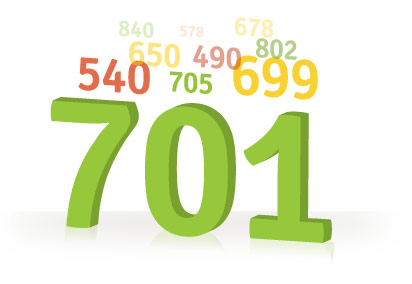
On both 300 to 850 scales, rough bands look like this:
- 800 and up: Exceptional. You’ll qualify for the best rates.
- 740 to 799: Very good. Most loans at strong rates.
- 670 to 739: Good. Approved for most credit, though not always the lowest rate.
- 580 to 669: Fair. Expect higher rates and some denials; many conventional mortgages start around 620.
- Below 580: Poor. Focus on payment history & lowering balances

Does Checking Your Credit Hurt Your Score?
No. Checking your own credit is a soft inquiry, and soft inquiries never affect your score. You can check daily if you want.
What does count is a hard inquiry, which happens when a lender pulls your credit because you applied for a loan or credit card. A hard inquiry can lower your score by a few points and stays on your report for two years, though its effect fades well before that.
How Often Should You Check Your Credit Scores?

- At least once a year for all three reports, even if nothing is going on.
- Monthly or with ongoing monitoring if you’re rebuilding credit, disputing errors or have been part of a data breach.
- Two to six months before a big application like a mortgage, auto loan or apartment lease. That gives you time to fix an error before a lender sees it.
- Right away if you get a denial letter, a collection call you don’t recognize or a bill for an account you didn’t open.
Monitoring does the “right away” part for you. Instead of remembering to check, you get an alert when a new account, inquiry or address change hits any of your three reports.
What To Do If Your Scores Don’t Match
- Compare the reports, not just the scores. Look for accounts, late payments, collections or inquiries that appear on one bureau and not the others.
- Check the balances and dates. Often the gap is just timing: a balance that updated on one bureau before the others.
- Dispute real errors with the bureau that has them. Each bureau takes disputes online, and it generally must investigate within 30 days.
- Watch for signs of identity theft. Accounts or addresses you don’t recognize mean you should place a fraud alert or freeze your credit, and visit IdentityTheft.gov.
Need credit checks for renting out a property? See our guide to tenant screening credit checks.
Formerly TotalCreditCheck.org

CheckYourCreditScores.com is the new home of TotalCreditCheck.org. Same team, same guides, new name that says what the site helps you do. If you came here looking for Total Credit Check, you’re in the right place. Note that we are not affiliated with Experian’s CreditCheck Total service.
Frequently Asked Questions
Yes. A 3-bureau service like TransUnion Credit Premium shows your Experian, Equifax and TransUnion reports and scores together in one dashboard.
You can get all three credit reports free at AnnualCreditReport.com, and several free tools show one or two scores. Seeing all three scores side by side with monitoring generally requires a paid service.
$29.95 per month plus tax where applicable, and you can cancel anytime.
Each bureau keeps its own report, lenders don’t always report to all three or on the same day, and errors usually appear on just one. Different scoring models also produce different numbers.
No. Checking your own credit is a soft inquiry and has no effect on your score.
Most lenders use a version of FICO, and mortgage lenders often look at all three bureaus. Many card issuers and monitoring services show VantageScore instead.